From Saturation to Precision: How Branding Is Evolving in 2026

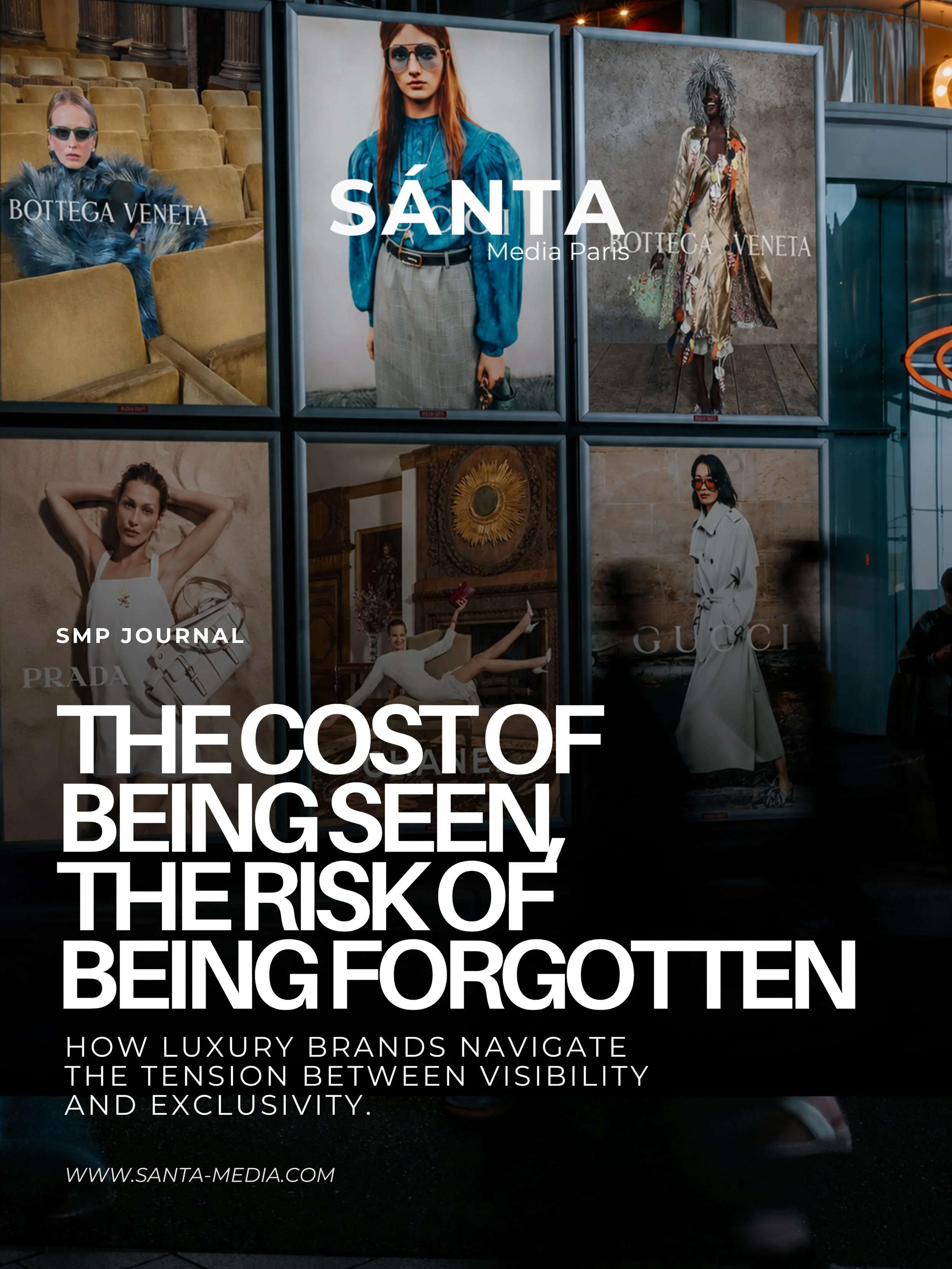
Image courtesy of Bottega Veneta Summer Campaign 2026

Image courtesy of Jacquemus
A structural shift is currently reshaping the foundations of branding in 2026. It is not the result of a singular technological disruption or a sudden cultural rupture, but rather the accumulation of incremental changes in audience behavior over time. Expectations have become more calibrated, tolerance for informational and visual excess has declined, and attention has evolved into a highly selective mechanism rather than a passive state.
Within this context, branding is not entering an entirely new paradigm, but is being compelled to correct structural assumptions that were built for a different attention economy.
For over a decade, brand strategy was largely governed by an expansion-based logic. Growth was equated with visibility, and visibility was engineered through output. Scale of production became a proxy for relevance. Continuous content, accelerated campaign cycles, and sustained presence were interpreted as indicators of influence.
That equation is still present in parts of the industry, but its effectiveness is increasingly conditional rather than universal.
The contemporary environment no longer rewards volume in isolation. Instead, it actively evaluates and filters it through relevance thresholds. Audiences function less as passive receivers of communication and more as real-time filtering systems, selectively allocating attention based on perceived meaning, clarity, and cultural value. In this environment, visibility without distinction does not accumulate impact; it often accelerates dilution and cognitive fatigue.
What is emerging is therefore not a retreat from ambition, but a recalibration of its operating logic. The strategic question is shifting away from output scale and toward communicative intent: not how much a brand is able to express, but how precisely, selectively, and intentionally it chooses to do so.
Attention Has Not Disappeared, It Has Become Selective
The digital landscape is defined by overexposure. Audiences move through an uninterrupted flow of content across platforms, fundamentally reshaping how attention functions. It is no longer scarce in volume, but in willingness.
In response, people have developed increasingly refined filtering behaviors. Much of this happens instinctively. Content is skipped, muted, or dismissed within seconds. This does not signal disengagement. It signals selectivity.
The implication is clear: being seen is no longer enough. A brand must justify why it deserves attention.
In this context, repetition without distinction leads to fatigue. Constant presence without clear value risks dissolving into background clutter. The issue is not visibility itself, but undifferentiated visibility.
Branding therefore shifts from occupying space to earning relevance within it.


Precision as Strategy
One of the most visible outcomes of this shift is a move toward greater selectivity. While often interpreted as minimalism, this framing is incomplete. What is emerging is not an aesthetic preference, but a strategic discipline.
Strong brands are becoming more deliberate in what they produce, when they appear, and how they communicate. This requires clarity of identity, timing, and intent.
In this context, restraint signals confidence and control. It reflects a brand that understands its value and does not depend on constant output to sustain relevance.
Bottega Veneta illustrates this clearly. By withdrawing from social media, the brand removed itself from the logic of constant visibility. This is not a stylistic gesture, but a strategic repositioning within an attention economy defined by saturation.
Its campaigns rely on visual codes such as color, texture, and casting rather than overt branding, with communication kept minimal and often non-verbal.
The effect is structural: absence becomes a filter. It reduces noise, concentrates attention, and transforms rarity into desirability. Visibility becomes intentional rather than continuous.

Image courtesy of Bottega Veneta Summer Campaign 2026

Similarly, The Row operates through controlled visibility across campaigns, retail, and runway presentation. The brand deliberately structures its presence rather than expanding it, maintaining a consistent discipline of precision and restraint in how and when it communicates.
Its communication is consistently understated, often reducing or entirely removing narrative in favor of materiality, tone, and proportion. The focus shifts away from storytelling toward sensory and visual coherence, where meaning is conveyed through subtlety rather than explicit messaging.
This approach creates a sense of distance, but also authority. By resisting constant exposure, the brand builds meaning through limitation. Absence is not a gap in communication, but an integral structural element, shaping how the brand is perceived over time.

Image courtesy of The Row SS/26

Image courtesy of The Row SS/26
Redefining Quality
The notion of perfection has undergone a structural shift in meaning rather than a simple aesthetic evolution. In previous years, highly polished visuals and meticulously controlled campaigns were established as the dominant benchmark of quality within branding and fashion communication. Today, that same visual uniformity often reads as predictable, over-determined, and emotionally flattened.
Audiences have developed an increasingly acute sensitivity to what feels overly constructed. When visual systems rely on identical compositional logic, lighting conventions, and post-production standards, they begin to lose their capacity to generate surprise or emotional engagement. In this context, perfection does not enhance desirability indefinitely; when overused, it becomes aesthetic closure rather than aspirational openness.
This does not indicate a decline in standards or craftsmanship. On the contrary, expectations around quality remain extremely high. What has changed is not the value of quality itself, but the criteria through which it is evaluated.
Depth, nuance, and atmospheric credibility have become central reference points. A visual or campaign that communicates mood, perspective, and interpretive space now carries more weight than one defined solely by technical control or visual optimization.
Quality is therefore no longer measured by the elimination of imperfection, but by the ability to generate resonance through controlled imperfection, tension, and emotional realism.
A strong example is Miu Miu, whose recent campaigns shift away from hyper-controlled visual perfection toward atmospheric construction and emotional texture, using natural light, movement, and deliberate impermanence as narrative and compositional tools.







Images courtesy of Miu Miu SS/26
Another relevant example is Dior, whose recent visual direction increasingly embraces an observational rather than constructed aesthetic logic. Rather than staging idealized or hyper-curated scenarios, the emphasis shifts toward gesture, presence, and a form of unembellished emotional realism, where meaning is derived from lived-like moments rather than perfected compositions.
Across both cases, quality is no longer anchored in perfection as a visual ideal, but redefined through emotional credibility and atmospheric depth as primary evaluative criteria.



Images courtesy of Dior SS/26
Beyond Trends: Cultural Positioning
The acceleration of trend cycles has fundamentally altered their strategic value. Trends now emerge and dissipate at a velocity that makes sustained brand alignment increasingly difficult, if not structurally unstable. In this context, brands that rely heavily on trend responsiveness often become locked into a reactive operating mode, continuously adapting their expression while rarely influencing the direction of cultural movement itself.
In contrast, cultural awareness introduces a more durable and structurally resilient positioning framework.
This operates beyond surface-level aesthetic monitoring and instead requires an understanding of the deeper forces that shape behavior, taste formation, and perception over time. It involves reading shifts in social dynamics, emotional undercurrents, and evolving value systems. Rather than asking what is trending in the present moment, the strategic inquiry shifts toward what is gaining cultural meaning and long-term relevance.
At this level, brands transition from reacting to culture to participating in the conditions that produce it.
A strong example is Prada, which consistently operates outside short-term aesthetic cycles. Its communication is grounded in conceptual frameworks and cultural analysis rather than reactive visual adaptation, resulting in a continuity of thought that persists across seasons while allowing for formal variation.






Images courtesy of Prada
Similarly, Bottega Veneta approaches cultural relevance through a logic of restraint and strategic consistency rather than trend participation. Its positioning is not defined by responsiveness to external aesthetic shifts, but by the deliberate limitation of visibility and controlled evolution of expression, which reinforces long-term recognizability.






Images courtesy of Bottega Veneta
The Rise of Editorial Thinking
One of the most significant structural shifts in contemporary branding is the gradual adoption of an editorial logic. Within this framework, communication is no longer primarily organized as promotion, but increasingly as a form of cultural publishing with authorship as its core principle.
Content is no longer treated as isolated output, but as part of an ongoing cultural narrative, where each expression contributes to a cumulative point of view. Within this system, continuity, intentionality, and authorship outweigh frequency as measures of strategic strength.
Branding is therefore moving away from a campaign-based logic and toward a model that is structurally closer to cultural publishing than traditional marketing communication.
A strong example is Saint Laurent, where campaigns operate as cinematic fragments of a consistently constructed visual universe. Rather than relying on explicit narrative development, the emphasis is placed on presence, attitude, and compositional control, where each image functions as an autonomous yet connected editorial statement.
This generates continuity not through storytelling in a linear sense, but through the repetition and refinement of a stable visual language defined by lighting, framing, and tonal discipline. Over time, repetition ceases to be repetition in the conventional sense and instead becomes a mechanism of authorship consolidation.







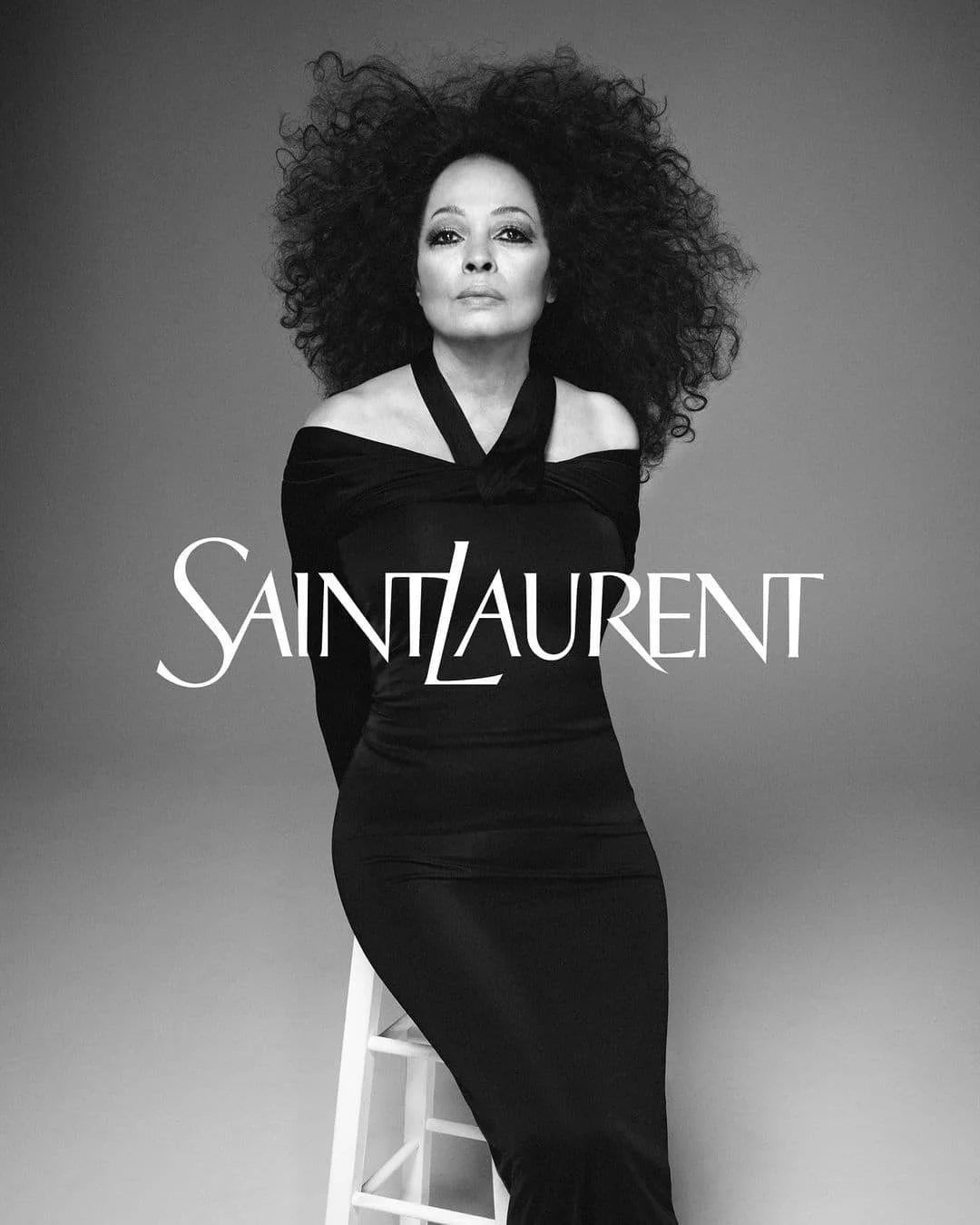


Images courtesy of Saint Laurent
Another relevant example is Jacquemus, which extends editorial thinking beyond visual communication into spatial and experiential production.
Rather than communicating through discrete campaigns, the brand constructs narrative environments through scale, location, and scenographic intent. Runways, activations, and presentations function as cultural events rather than conventional product showcases.
Each output operates as a chapter within a continuously expanding visual and spatial universe. In this model, branding shifts fundamentally from communication as messaging to world-building as a strategic system of meaning production.



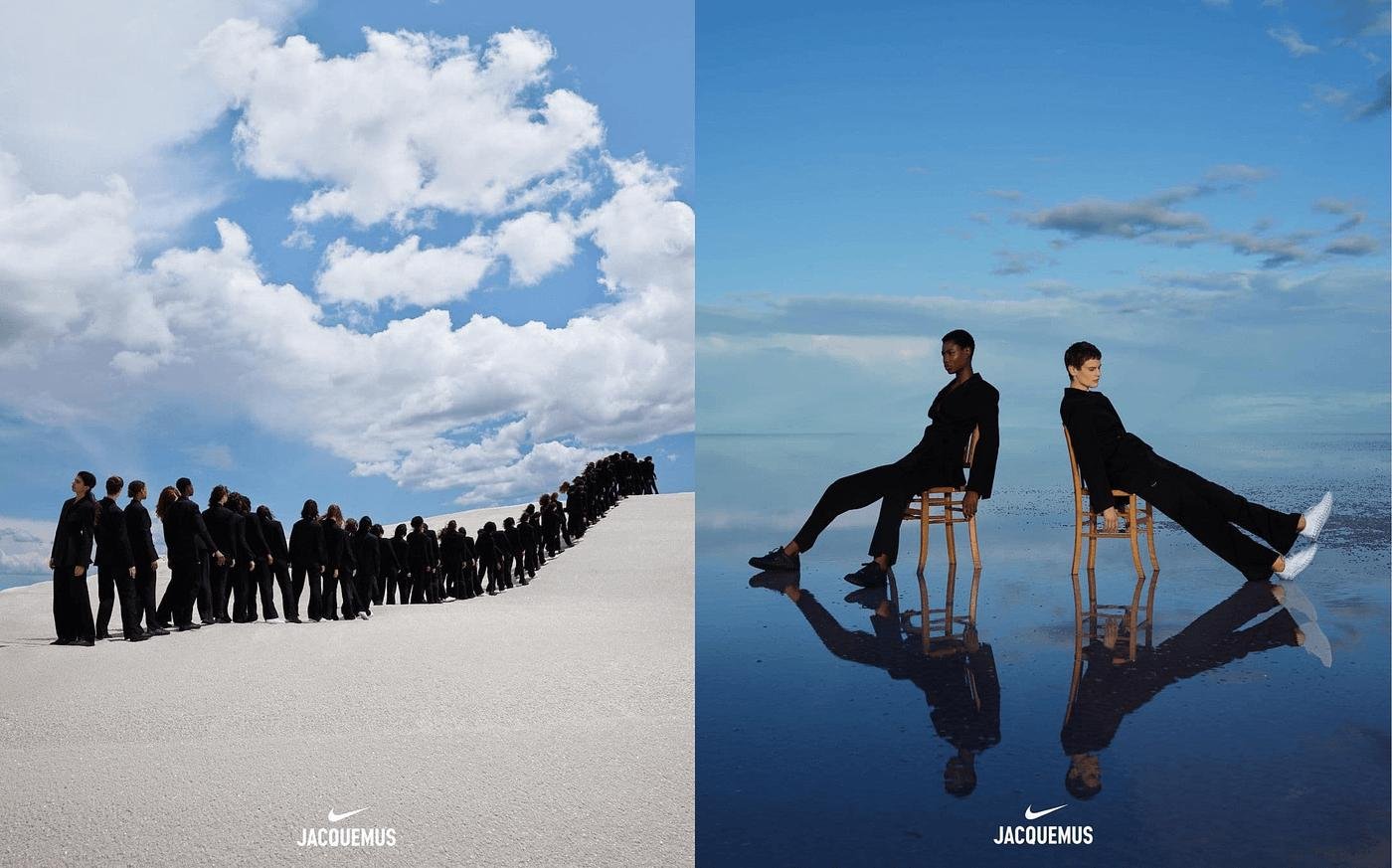


Images courtesy of Jacquemus
Community and the Shift in Power
The relationship between brands and audiences has undergone a fundamental structural reconfiguration. The traditional model of one-directional communication where brands broadcast controlled messages to passive audiences has become increasingly insufficient in an environment defined by fragmented attention and participatory media systems.
In its place, a more reciprocal and distributed communication architecture has emerged.
Within this framework, communities have become central to the production of brand value. They are no longer defined primarily by scale or demographic composition but by degrees of alignment, participation, and emotional investment. They form around shared values, aesthetic codes, and cultural references rather than traditional segmentation logic.
This shift requires a move away from communication as a mechanism of control toward communication as a negotiated system of meaning. In this context, meaning is no longer fully authored or stabilized by the brand itself but is continuously shaped through interpretation, circulation, and audience-led recontextualization.
As a result, brands operate within a system where they must balance articulation with reception, and where listening becomes as strategically important as speaking. Visibility in itself is no longer a sufficient condition for relevance and participation within cultural exchange mechanisms becomes essential.
A strong example is Skims, which has built its growth through cultural participation and community-driven amplification. Its communication strategy is structured around inclusive casting, strategic use of culturally recognizable figures, and highly responsive digital engagement, reinforcing proximity rather than distance.
Within this model, the audience is no longer positioned outside the brand narrative as a receiver of meaning but is structurally embedded within its formation. Meaning is therefore not delivered but continuously co-produced through interaction, interpretation, and redistribution across networks.






Images courtesy of SKIMS
Identity as the Core of Strategy
Amid these broader structural shifts, one element has become increasingly central: identity.
In an environment defined by limited attention and intensified competition, clarity of identity functions as a primary mechanism of differentiation and strategic orientation. A strong brand is therefore not defined by reach or output volume, but by its degree of recognizability and internal coherence over time.
This requires consistency across all dimensions of expression, including visual language, tone of voice, and strategic decision-making. However, beyond consistency, it also demands explicit definitional clarity regarding what the brand represents and, equally importantly, what it systematically excludes.
In this sense, identity operates as a structural filter rather than a stylistic layer. It pre-selects decisions before execution, shapes expressive boundaries, and ensures coherence across time and touchpoints.
Without this underlying structure, even highly executed initiatives risk becoming fragmented, as they lack a stable logic of continuity.
A strong example is Chanel, which maintains one of the most consistent and instantly recognizable identities within luxury. Across campaigns and collections, the brand preserves a stable visual and tonal system rooted in controlled elegance, recurring silhouettes, and established codes such as tweed, pearls, and monochromatic restraint.







Images courtesy of CHANEL
This consistency does not operate as repetition for its own sake, but as a strategic filtering mechanism that defines what is compatible with the brand system and what falls outside of it. In doing so, it ensures long-term coherence across all expressions, while deliberately resisting the logic of constant reinvention.
In this framework, identity is not a surface-level articulation, but the underlying structural logic that organizes and stabilizes the entire brand system over time.
A More Demanding Era, Not a Simpler One
Branding is not becoming simpler. It is becoming structurally more demanding and less forgiving of imprecision.
The objective is not reduction for its own sake. Doing less is not the strategic goal. Rather, the shift is toward eliminating everything that does not carry functional, cultural, or perceptual necessity.
This requires a significantly higher level of judgment, a more defined and resilient sense of identity, and a deeper degree of intentionality in every decision. It also requires the ability to resist the systemic pressure of constant responsiveness, where relevance is often mistaken for reaction speed.
In 2026, competitive advantage is no longer produced through constant visibility or continuous output. It is increasingly determined by the ability to operate through relevance, timing, and conceptual depth rather than frequency.
Precision is therefore not a stylistic preference or creative direction. It is a structural requirement of contemporary brand systems operating under conditions of saturation and selective attention.

Images courtesy of Celine SS/26

Images courtesy of Celine SS/26