The End of Excess in Branding

Image courtesy of Bottega Veneta Summer Campaign 2026

Image courtesy of Jacquemus
A profound transformation is redefining the very foundations of branding in 2026. It is not driven by a single technological breakthrough or a sudden cultural disruption, but by a gradual and collective shift in perception. Audiences have changed. Their expectations, tolerance, and attention have fundamentally evolved. As a result, branding itself is being redefined.
For years, brands operated within a paradigm of expansion. Growth was associated with visibility, and visibility was achieved through volume. The more a brand produced, the more relevant it was assumed to be. Content became constant, campaigns became frequent, and presence became synonymous with power.
In 2026, that assumption no longer holds.
What is emerging is the end of excess as a viable strategy. Not because ambition has diminished, but because the environment no longer rewards saturation. It rewards discernment.
Saturation and the New Economy of Attention
The digital landscape has reached a point where attention is no longer abundant. It is scarce, selective, and increasingly resistant. Audiences are exposed to an overwhelming flow of information, imagery, and messaging on a daily basis. In response, they have developed increasingly precise filtering mechanisms.
This filtering is not always conscious, but it is decisive. People scroll past, mute, unfollow, and disengage with remarkable speed. The question is no longer whether a brand is visible, but whether it is worth noticing.
In this context, excess becomes counterproductive. Repetition without substance leads to fatigue. Overexposure diminishes perceived value. When a brand is everywhere, it risks becoming invisible in a different way, absorbed into background noise.
The shift is therefore from occupying space to justifying presence. Every expression of a brand must now carry intent. Every interaction must feel necessary.


Restraint as a Strategic Advantage
Restraint has become a defining characteristic of strong brands. It signals confidence, clarity, and control. To communicate less, but with greater impact, requires a precise understanding of identity and intent.
This is not minimalism as an aesthetic position. It is precision as strategy.
Brands that adopt restraint become selective in their actions. They do not react to every trend or opportunity. Instead, they evaluate relevance, timing, and alignment. Their output is curated rather than constant.
This creates a new form of perception: anticipation through absence.
A strong example is Bottega Veneta. By withdrawing from social media, the brand removed itself from the logic of constant visibility. This is not a stylistic gesture, but a strategic repositioning within an attention economy defined by saturation.
Its campaigns rely on visual codes such as color, texture, and casting rather than overt branding, with communication kept minimal and often non-verbal.
The effect is structural: absence becomes a filter. It reduces noise, concentrates attention, and transforms rarity into desirability. Visibility becomes intentional rather than continuous.

Image courtesy of Bottega Veneta Summer Campaign 2026

Another example is The Row, which extends restraint into every layer of communication.
The brand operates through controlled visibility across campaigns, retail, and runway presentation. Communication is deliberately understated, often removing narrative altogether in favor of materiality, tone, and proportion.
This creates distance, but also authority. By resisting constant exposure, The Row builds meaning through limitation. Absence is not a gap in communication; it is part of its structure.

Image courtesy of The Row SS/26

Image courtesy of The Row SS/26
Redefining Quality Beyond Perfection
The notion of perfection has undergone a significant shift. In previous years, highly polished visuals and meticulously controlled campaigns were considered the standard of quality. Today, that same uniformity often feels predictable and emotionally distant.
Audiences have developed an acute sensitivity to what feels overly constructed. When every image follows the same visual logic, it loses its capacity to surprise or resonate. Perfection, when overused, becomes limiting rather than aspirational.
This does not signal a decline in standards. On the contrary, the demand for quality remains high. What has changed is the definition of what quality actually means.
Depth, nuance, and authenticity have become central. A visual or campaign that conveys atmosphere, thought, and perspective now carries more weight than one defined by technical flawlessness alone.
Quality is no longer about eliminating imperfection. It is about creating resonance.
A strong example is Miu Miu, whose recent campaigns shift away from controlled perfection toward atmosphere and emotional texture, using natural light, movement, and impermanence as narrative tools.







Images courtesy of Miu Miu SS/26
Another relevant example is Dior, whose recent visual direction embraces an observational aesthetic. Rather than constructing idealized scenarios, it focuses on gesture, presence, and emotional realism.
In both cases, quality is no longer defined by perfection, but by emotional credibility and atmospheric depth.

Images courtesy of Dior SS/26
From Trend Participation to Cultural Awareness
The acceleration of trend cycles has fundamentally changed their value. Trends appear and disappear at a pace that makes sustained engagement difficult. Brands that rely heavily on trends often find themselves in a reactive position, constantly adapting but rarely shaping direction.
In contrast, cultural awareness offers a more sustainable strategic position.
This involves understanding the underlying forces that shape behavior, taste, and perception. It requires attention to social dynamics, emotional climates, and evolving values. Rather than asking what is trending, brands begin to ask what is meaningful.
By operating at this level, brands shift from reacting to culture to participating in its formation.
A strong example is Prada, which consistently operates beyond short-term aesthetics. Its communication is driven by conceptual frameworks and cultural analysis rather than reactive visual trends, creating continuity of thought across seasons.






Images courtesy of Prada
Another great example is Bottega Veneta, which approaches cultural relevance through restraint and consistency rather than trend participation.






Images courtesy of Bottega Veneta
The Rise of Editorial Thinking
One of the most significant shifts in branding is the adoption of an editorial mindset. Communication is no longer structured as promotion, but increasingly as publishing.
Content exists within an ongoing cultural narrative, where each output contributes to a broader point of view. Continuity, intention, and authorship are now more important than frequency.
Branding is therefore moving closer to cultural publishing than marketing.
A strong example is Saint Laurent, where campaigns function as cinematic fragments of a consistent visual world. Rather than constructing narrative environments, the focus is placed on presence, attitude, and composition, where each image functions as a standalone editorial frame.
This creates continuity not through storytelling, but through a consistent visual language defined by lighting, framing, and tone. Over time, repetition becomes authorship.




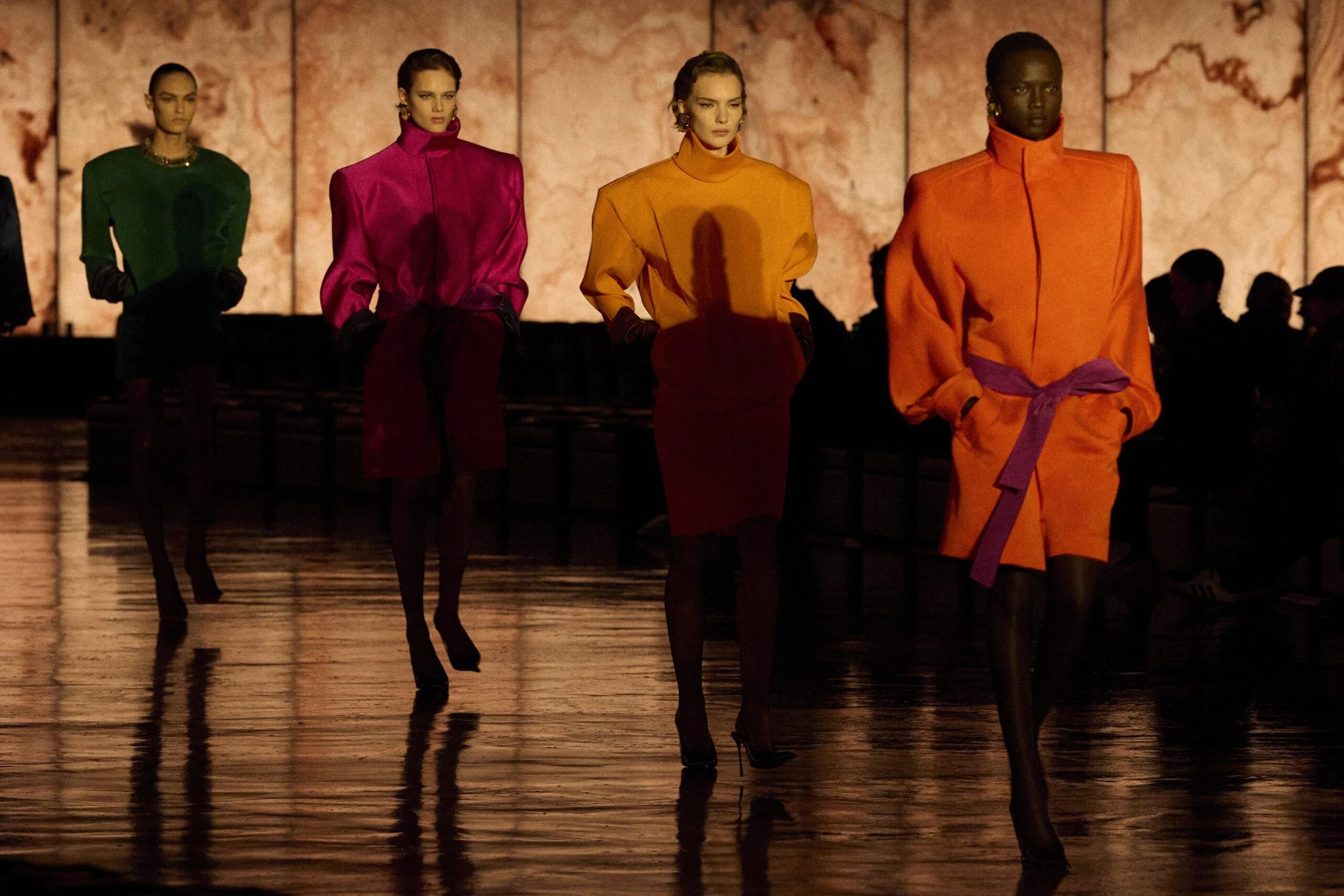


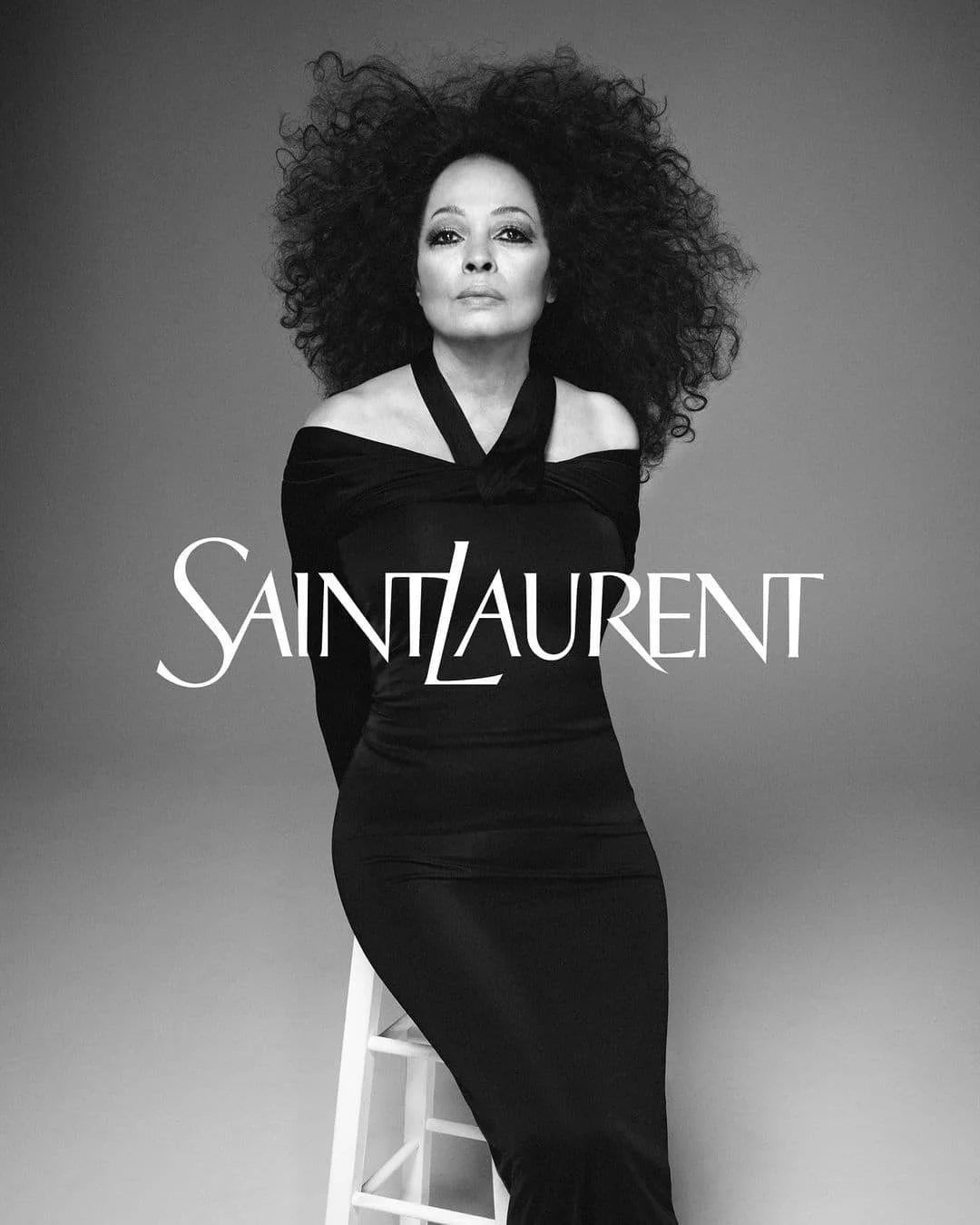


Images courtesy of Saint Laurent
Another strong example is Jacquemus, which extends editorial thinking into spatial and cultural production.
Rather than communicating through isolated campaigns, Jacquemus builds narrative environments through scale, location, and experience. Runways and activations become cultural moments rather than product presentations.
Each output functions as a chapter within a larger visual universe. This shifts branding from communication into world-building as strategy.



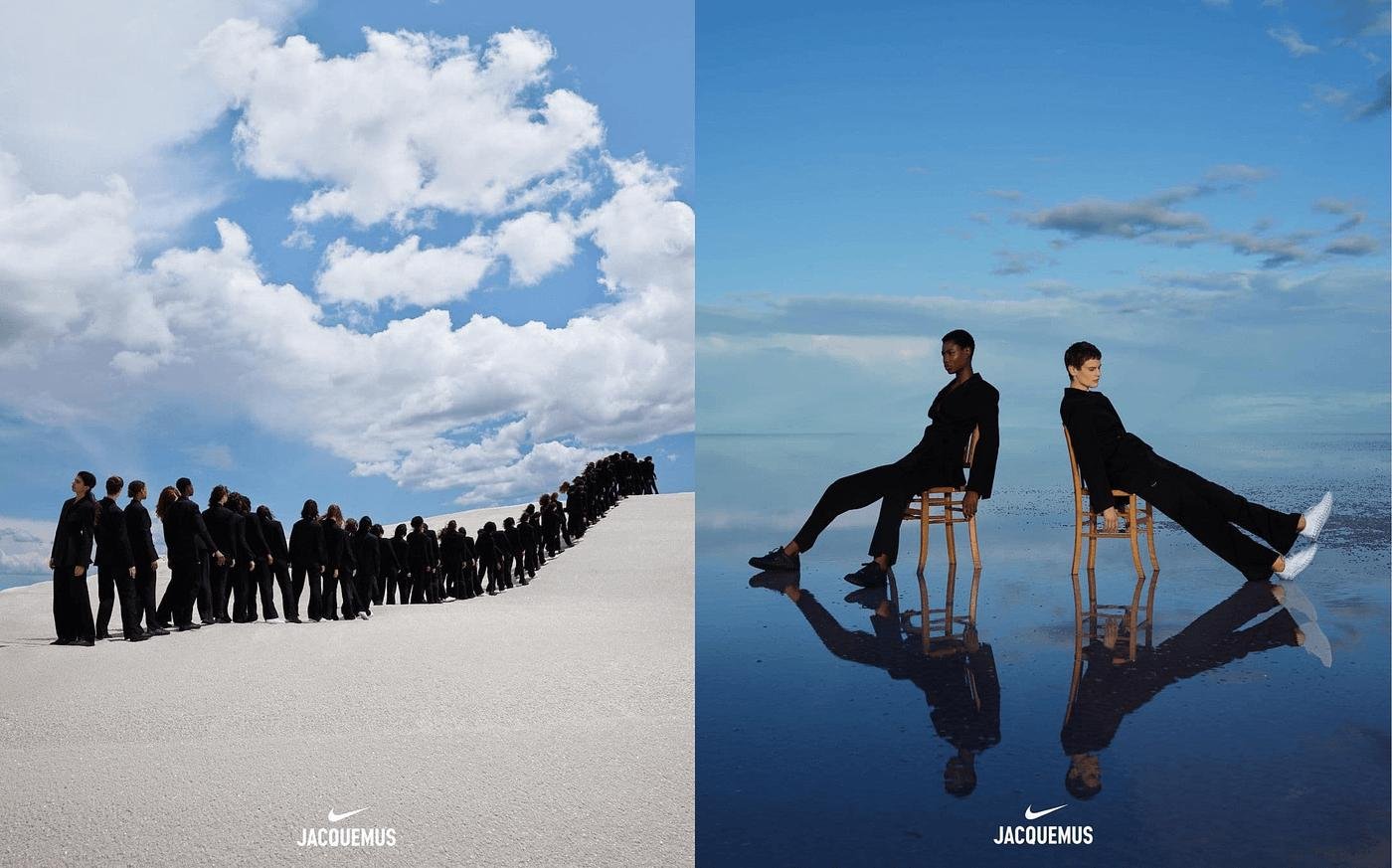


Images courtesy of Jacquemus
Community and the Shift in Power
The relationship between brands and audiences has fundamentally changed. The traditional model of one-way communication, where brands broadcast messages to passive audiences, is no longer sufficient.
In its place, a more reciprocal and distributed dynamic has emerged.
Communities are now central to brand value. They are no longer defined by size, but by alignment, participation, and emotional investment. They form around shared values, aesthetics, and cultural codes rather than demographics.
This shift requires brands to move beyond communication as control. Meaning is no longer fully defined by the brand. It is shaped through interpretation, response, and circulation.
As a result, brands must listen as much as they speak. Visibility alone is no longer enough; participation becomes essential.
A strong example is Skims, which has built its growth through cultural participation and community-driven visibility. Its communication strategy relies on inclusive casting, recognizable cultural figures, and highly responsive digital engagement.
In this model, the audience is no longer external to the brand narrative, but embedded within it. Meaning is continuously co-created through interaction.






Images courtesy of SKIMS
Identity as the Core of Strategy
Amid these shifts, one element has become increasingly central: identity.
In an environment defined by limited attention and intense competition, clarity of identity provides direction and differentiation. A strong brand is not defined by reach, but by recognizability.
This requires consistency across all dimensions, from visual language to tone of voice to strategic decision-making. It also requires deliberate clarity about what the brand represents, and what it intentionally excludes.
Identity acts as a structural filter. It shapes decisions, guides expression, and ensures coherence over time.
Without it, even the most well-executed strategies risk becoming fragmented.
A strong example is Chanel, which maintains one of the most consistent and recognizable identities in luxury.







Images courtesy of CHANEL
Across campaigns and collections, Chanel preserves a stable visual and tonal language rooted in timeless silhouettes, controlled elegance, and recurring codes such as tweed, pearls, and monochrome palettes.
This consistency functions as a strategic filter. It defines what belongs to the brand and what does not, ensuring coherence across all touchpoints. Rather than pursuing constant reinvention, Chanel reinforces recognition through repetition and refinement.
In this sense, identity is not a surface layer, but the underlying structure that holds the entire strategy together.
The Discipline of Less
The end of excess is not a limitation. It is a refinement.
Branding in 2026 requires discipline. It demands thoughtful, deliberate action over instinctive reaction. It challenges brands to prioritize meaning over momentum and clarity over complexity.
Power no longer lies in constant visibility. It lies in relevance, timing, and depth.
To do less, but to do it exceptionally well, is no longer a creative choice. It is a strategic imperative.

Images courtesy of Celine SS/26

Images courtesy of Celine SS/26